Marshall Islands
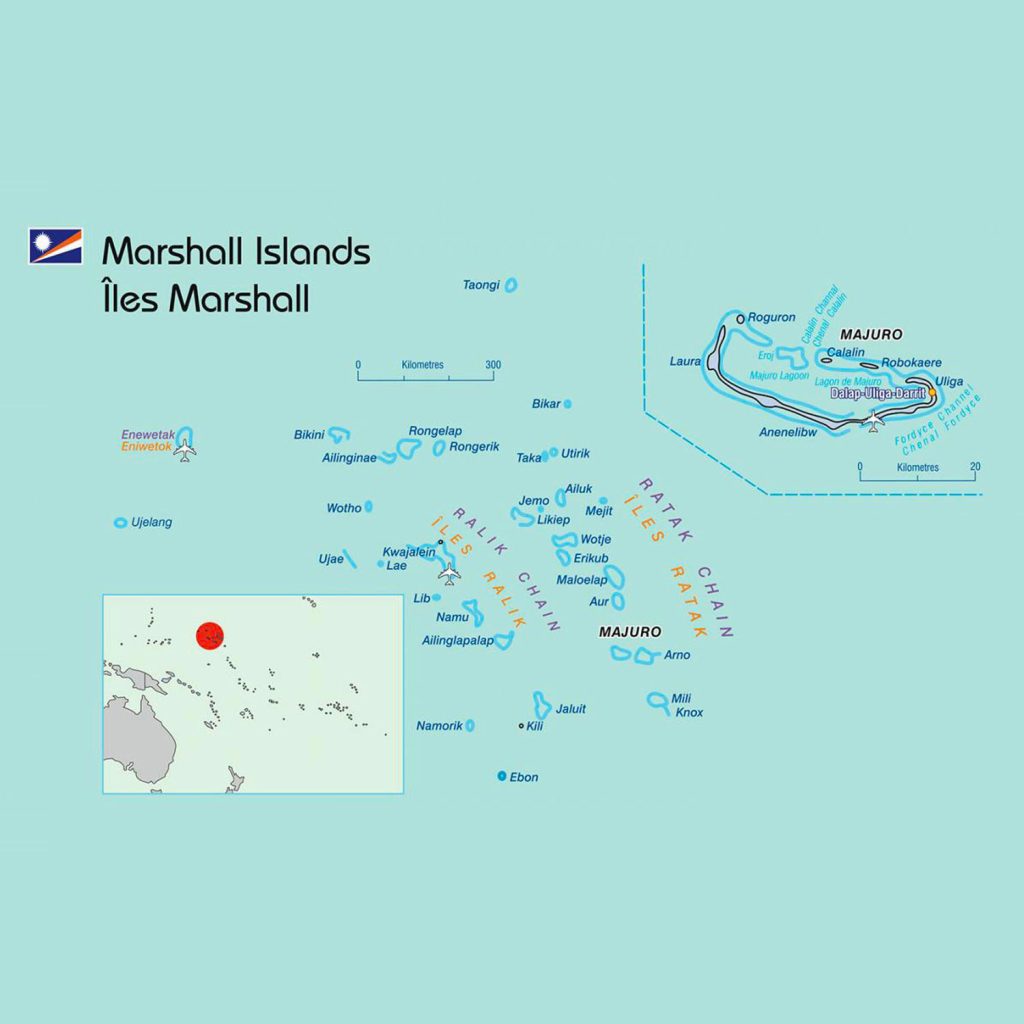
The Marshall Islands are a sprawling chain of volcanic islands and coral atolls in the central Pacific Ocean, between Hawaii and the Philippines.
After WWll, the Marshall Islands became part of the Trust Territory of the Pacific Islands, administered by the United States. Between 1946 and 1958, the U.S. conducted 67 nuclear weapons tests, primarily on Bikini and Enewetak Atols, causing significant environmental and health concerns.
Marshallese TB Cultural Profile, Summary
The Marshall Islands have an extremely high incidence of tuberculosis (TB) disease, at least 100 times higher than in the U.S. as a whole. Individuals who identify as Marshallese accounted for approximately 12% of all TB disease cases in Washington State in 2023. The prevalence of latent tuberculosis infection (LTBI) is estimated to be much higher (approximately 30% based on recent WHO testing). The history of nuclear testing by the U.S., lack of trust in the U.S. medical system, barriers to healthcare access, and stigma regarding TB can make individuals hesitant to undergo screening. READ the complete profile here.
Health Care Coverage
Health Care Coverage is now available for Compact of Free Association Islanders (COFA). Starting January 1, 2019, the WA State Health Care Authority will be paying the monthly premiums and out-of-pocket expenses for silver level Qualified Health Plans for Compact of Free Association islanders. COFA islanders include people from the Republic of the Marshall Islands, the Federated States of Micronesia, and the Republic of Palau.
Download the PDF flyer here.
“Between 1946 and 1958, the U.S. detonated 67 nuclear devices in and around the Marshall Islands. The impact of these tests on the Marshallese people was profound – in terms of both actual radioactive exposure and the displacement of people from their home islands due to contamination and to accommodate the U.S. military.” –California Newsreel
Their traditional diet and way of life disrupted by globalization and the American military presence in the equatorial Pacific, Marshall Islanders now struggle with high rates of diabetes, among other health problems.” -California Newsreel
“Dise Langrus is one of many Marshallese who were relocated from their home islands 40 years ago after U.S. nuclear testing rendered it uninhabitable. Others were moved to make room for the construction of the U.S. military base on Kwajalein Island. Today, the Marshallese confront the worst of the “developing” and urbanized worlds: infectious disease running rampant because of poverty and squalid conditions and chronic illnesses resulting in part from the stress of dislocation and cultural loss.”–California Newsreel
Health Education Materials
Diabetes
Marshallese translation of Take Charge of Your Diabetes – a Reinforcement Booklet for People with Diabetes, from the resource library of the State of Hawaii, Department of Health Diabetes – Chronic Disease Prevention & Health Promotion Division
Marshallese – Pacific Diabetes Education Program was a five-year project (2005-2010) funded by the Centers for Disease Control and Prevention to improve the availability and dissemination of culturally and linguistically appropriate diabetes education materials. The website provides access diabetes education materials and resources that were created especially for Native Hawaiians and Pacific Islanders.
: Health education videos recorded in Marshallese with English subtitles on topics of glucose testing and diabetes medication. The Center for Pacific Islander Health is a multi-disciplinary center at the University of Arkansas for Medical Sciences (UAMS) Northwest in Fayetteville, Arkansas focusing on research, community programs, training, and policy.
Other
Marshallese – Health Information Translations from healthinfotranslations.org: health education materials in many languages, including Marshallese, via a website collaboration of health education specialists from the four health systems in Central Ohio.
Health Information in Marshallese (Ebon): MedlinePlus: trusted health Information in Marshallese (Ebon) from the National Library of Medicine’s consumer health information website.
: links to health education materials in many languages, including Marshallese, gathered by the Utah Dept. of Health.