An overview of what mental illness is, possible causes and some of the most common forms of mental illness.
PDF handout (5-6 pages) is available in Amharic, English, Oromo, Somali and Tigrinya. See sidebar.

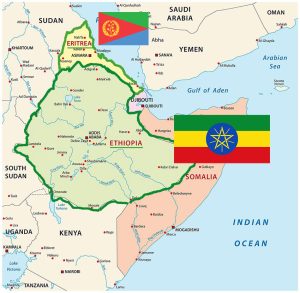
Tigrinya is the primary language spoken in Eritrea and spoken predominantly in the northern Ethiopian state of Tigray.
For more Eritrean resources, please check out our patient and provider resources under our Eritrean cultural profile.
Please also check our patient and provider resources under the our Ethiopian cultural profile.
An overview of what mental illness is, possible causes and some of the most common forms of mental illness.
PDF handout (5-6 pages) is available in Amharic, English, Oromo, Somali and Tigrinya. See sidebar.

Explanation of chemotherapy for breast cancer, including description of treatment cycles, and what to expect after treatment.
2 page PDFs in Amharic, English, Somali, and Tigrinya. PDFs in sidebar.
Adapted and translated with permission from breastcancer.org, and funding from Avon and Lance Armstrong Foundations.

These breast cancer surgery informational handouts provide a description of mastectomy, lumpectomy and potential side effects following these surgeries. Available in sidebar in Amharic, English, Somali and Tigrinya.
The following video slideshows provide introductory information about lumpectomy, mastectomy and breast reconstruction procedures. Available in English, Amharic, Khmer, Somali, Spanish, Tigrinya and Vietnamese. Accompanying handouts are in sidebar.
A project by EthnoMed and Healthy Roads Media, produced in collaboration with the Community House Calls Program at Harborview and its community partners. This project has been funded in whole or in part with Federal funds from the Department of Health and Human Services, National Institutes of Health, National Library of Medicine, under Contract No. HHS-N-276-2011-0008-C with the University of Washington. Thank you to Safeway Foundation for its support to Harborview Medical Center’s EthnoMed for the development of cancer-related content.

Explanation of margins of resection, including definition of positive, negative and close margins.
PDFs available in Amharic, English, Somali, and Tigrinya. See sidebar.
Adapted and translated with permission from breastcancer.org, and funding from Avon and Lance Armstrong Foundations.

Patient education about asthma, including information about irritants, symptoms and treatment. English version is below, with Amharic and Tigrinya version in the resource sidebar.
This patient education material is provided by the Community House Calls project, International Medicine Clinic and Children’s Clinic, Harborview Medical Center, University of Washington, Seattle, WA.
In (country), it is called ________.
Asthma is a common illness in the United States.
Asthma can occur in children and adults
Asthma is an illness of the lungs.
Asthma occurs when parts of the lung are very sensitive or easily bothered by something in the air.
A person with asthma may be exposed to new things in this country which bother or irritate the lungs.
These things include:
All of these things can make asthma symptoms worse.
Other things that can make asthma symptoms worse include:
Asthma can occur inside a house or outside.
Houses in the United States are built to be closed off from the outside.
Houses can trap things inside that make asthma symptoms worse.
Symptoms of asthma include:
Usually there is no fever.
These symptoms occur because the lungs close down.
It is hard for air to get in and out of the lungs.
Asthma usually occurs in episodes or attacks.
Asthma can be worse during certain months of the year or at night.
Asthma may begin in childhood and it can be a problem through adult life.
Some people with asthma have relatives with asthma.
Asthma is not contagious.
You cannot give a person asthma by
People with asthma are born with lungs which are more sensitive or easily bothered by things in the air.
People with asthma need to see their doctor if they:
Sometimes if asthma gets worse, it can be very serious.
A person with asthma needs to see the doctor right away if:
The doctor will talk to you and examine you.
If the doctor diagnoses asthma, you will get medicine.
The medicines we use open up the lungs again.
The medicine will make the cough go away and make breathing easier.
We use several kinds of medicine to treat asthma.
Different medicines open up the lungs in different ways.
Sometimes we use one or more medicines together.
Some medicine is given for only a few days.
Some medicine is given for a long time.
Sometimes you need to take the medicine several times a day.
The medicine can be given in different ways:
The small container is called an inhaler.
For people who are sicker with asthma and for small children,the doctor may prescribe a machine to give medicine.
The machine is called a nebulizer.
The machine mixes air and medicine to breathe into the lungs.
Here are some names of the medicine:
Some of these medicines have a different brand name.
Doctors like to know what medicines you are taking, so:
People with asthma need to:
Other things to do to help a person with asthma include:
Houses can trap things in the air that make asthma symptoms worse.
Dust and mold are common things that make asthma worse in the house.
Families with asthma need to do things in the house to make asthma better.
Clean the house when the person with asthma is not at home.
Get rid of rugs.
If you cannot get rid of a rug, vacuum it every day.
Clean floors with rag or mop and water.
Keep furniture plain and simple.
Avoid soft chairs or sofas which have lots of stuffing.
Dust furniture often.
Use bleach solution to clean mold around windows.
Use curtains or shades that can be washed.
Keep the house well ventilated.
Keep smoke from cigarettes, pipes, incense outside.
Keep smoke away from the person with asthma.
Keep animals or pets outside and away from the person with asthma.
For the person with asthma’s bedroom:

Explanation of what lymph nodes are, including what is meant by “node-positive” and “node-negative”, lymph node biopsy and sentinel lymph node surgery.
PDFs are available in Amharic, English, Somali, and Tigrinya. See sidebar.
Adapted and translated with permission from breastcancer.org, and funding from Avon and Lance Armstrong Foundations.

Explanation of radiation therapy, how it works, why it is necessary, what to expect during the treatment and information about side effects.
PDFs are available in the sidebar in English, Somali and Tigrinya.
Adapted and translated with permission from breastcancer.org, and funding from Avon and Lance Armstrong Foundations.

Definition of hormones, hormone receptors and therapy in relation to breast cancer.
PDFs available in Amharic, English, Somali and Tigrinya. See sidebar.
Adapted and translated with permission from breastcancer.org, and funding from Avon and Lance Armstrong Foundations.

Description of potential side effects caused by chemotherapy treatment, including hair loss, fatigue, nausea, and changes in taste/smell. Includes eating tips to reduce nausea and vomiting.
5 page PDF available in Amharic, English, Somali and Tigrinya. PDFs in sidebar.
Adapted and translated with permission from breastcancer.org, and funding from Avon and Lance Armstrong Foundations.

Description of breast biopsy. See Lymph Nodes and Breast Cancer for information about lymph node biopsy.
2 page PDFs (in sidebar) available in Amharic, English, Somali, and Tigrinya.
Adapted and translated with permission from breastcancer.org, and funding from Avon and Lance Armstrong Foundations.

Introductory explanation and general overview of screening and diagnostic tests for breast cancer, as well as common treatments.
Available in English, Amharic, Tigrinya, and Somali. See PDFs in sidebar.
Adapted and translated with permission from breastcancer.org, and funding from Avon and Lance Armstrong Foundations.

Technical terms and definitions related to breast cancer.
4 page PDFs available in Amharic, English, Tigrinya and Somali. See sidebar.
Adapted and translated with permission from breastcancer.org, and funding from Avon and Lance Armstrong Foundations.